Should your facility own its transformation, or let the utility do it?
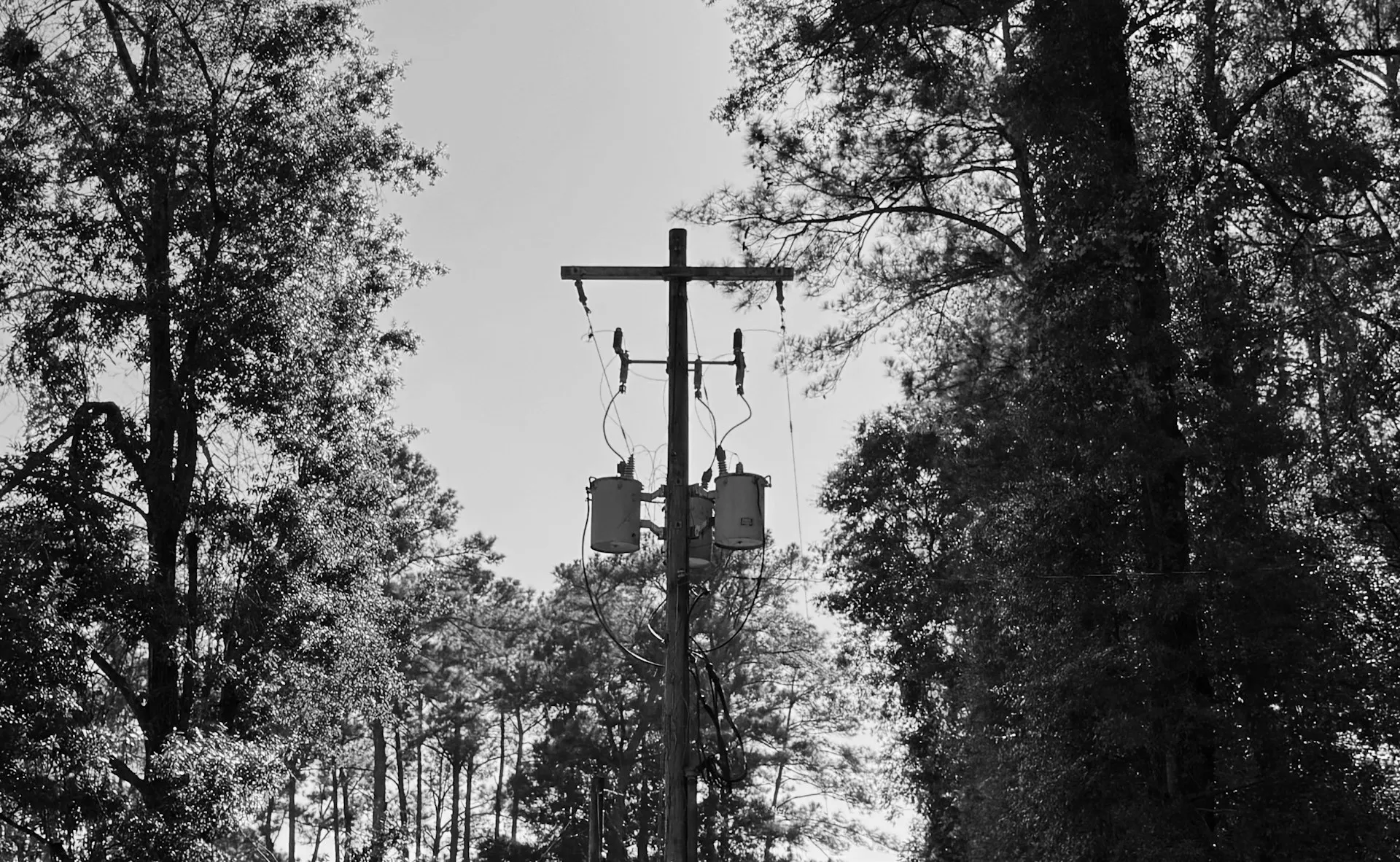
Every building on the grid is fed at a voltage the utility chooses. Small commercial and residential loads take power at low voltage — the 600-volt class or below — and the utility owns the transformer that steps its distribution line down to the building’s service. As a facility’s demand grows, though, the utility eventually stops offering that arrangement and asks the customer to take medium-voltage service instead: accept power at the distribution line’s own voltage and step it down on-site, with equipment the customer owns.
That shift is one of the larger electrical decisions a big industrial plant, data center, or charging hub makes. It changes who owns the transformer, who maintains it, who pays for its losses, and how the site is billed. The savings can be real, but so are the obligations.
What “medium-voltage service” actually means
North American codes place the line between low and medium voltage near 1,000 volts. The National Electrical Code treats equipment “over 1,000 volts, nominal” as a distinct class governed by Article 490. Utility primary distribution runs well above that boundary — commonly 4.16, 12.47, 13.8, 25, or 34.5 kV — and a facility on medium-voltage service connects at that level rather than at 208 or 480 V.
Primary versus secondary metering
The billing side of the decision is metering. With secondary metering, the utility’s meter sits on the low-voltage side of a utility-owned transformer. The customer buys power already stepped down and never sees the transformer. With primary metering, the meter sits on the medium-voltage side, ahead of a customer-owned transformer. The customer now buys power at medium voltage and owns everything past the meter.
Because the utility no longer owns or maintains the transformer — and because primary metering does not bill the customer for that transformer’s losses — most utilities discount the primary rate. One Colorado utility, for example, reduces both the demand charge and the energy charge by 3 percent for primary-metered service. Other utilities structure the credit differently, or offer none, so the tariff has to be read closely before the economics can be trusted.
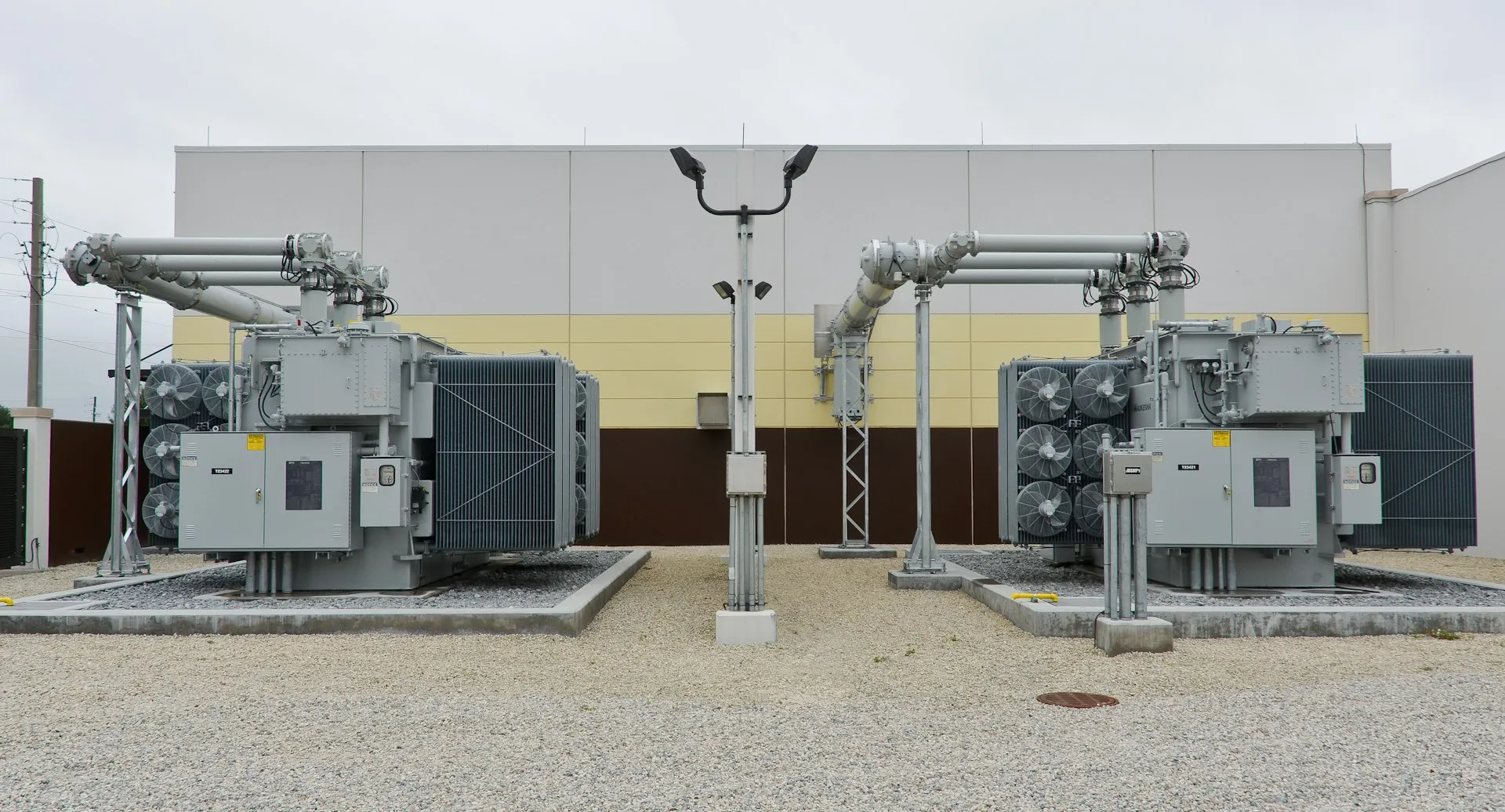
What a customer-owned substation contains
Taking medium-voltage service means building, in effect, a small substation on-site. A typical package includes:
- A medium-voltage service entrance and metering point at the utility connection.
- Primary switchgear — often metal-clad switchgear or a pad-mounted ring-main unit — to switch and protect the incoming line.
- One or more step-down transformers, such as an oil-immersed power transformer or a pad-mounted unit, to bring the voltage to utilization level.
- Low-voltage switchgear or switchboards — for example low-voltage switchgear with motor control — to distribute power through the building.
- Protection relays and grounding coordinated across the whole chain.
Many buyers order this as a single engineered assembly rather than a field-assembled collection of parts. A compact secondary unit substation or a modular skid unit substation combines the primary switch, transformer, and low-voltage section into one coordinated lineup, which shortens installation and simplifies protection coordination. For campus or utility-scale sites, substation and power-distribution solutions scale the same idea up.
Where medium-voltage service makes sense
The choice is mostly about load size and load profile. Below a few hundred kVA, the rate discount rarely covers the transformer, switchgear, protection, and ongoing maintenance, and utility-owned secondary service is the simpler path. Somewhere above that — the exact trigger depends on the utility and can range from a few hundred kVA to a few MVA — medium-voltage service often becomes mandatory rather than optional, because a low-voltage service simply cannot carry the current.
Facilities that cross the line early include large industrial and EPC projects with heavy motor loads, data centers whose halls draw megawatts, and high-power DC fast-charging hubs. For those sites the question is rarely “should we?” but “how do we build the on-site substation well?” A steady, high load factor strengthens the case: the more hours a year the site runs near its peak, the more a percentage rate discount is worth against the fixed cost of owning transformation.
What a buyer should specify
A customer-owned substation is only as good as its specification. The items worth pinning down early:
- Service voltage and available fault current from the utility, which set the interrupting rating of the primary switchgear and the transformer’s impedance.
- Transformer rating and connection — typically delta-wye for a step-down — plus a loss evaluation, since the owner now pays for no-load losses that run continuously whether or not the plant is working.
- Standards context. Medium-voltage switchgear is specified against IEEE C37 standards and transformers against ANSI/IEEE C57; low-voltage assemblies are specified against UL 891 or UL 1558; the overall installation follows the NEC or Canadian CEC. Equipment should be designed and built to these standards, with UL (cULus) or CSA certifiable on request.
- Protection and coordination, so a downstream fault clears at the nearest device without dropping the whole service.
- Metering location, confirmed against the utility’s primary-service tariff so the expected rate credit is actually captured.
The bottom line
Medium-voltage service trades simplicity for control. A facility that takes it owns its transformation — the transformer, the switchgear, the protection, and the losses — in exchange for a lower rate and, often, quicker access to capacity than waiting on a utility-side upgrade. For loads large enough to clear the threshold, the real work is building a substation that is safe, well coordinated, and easy to maintain. Entogo’s vertically integrated factory supplies the full chain — medium-voltage switchgear, step-down transformers, unit substations, and low-voltage distribution — designed and built to the governing IEEE, ANSI, UL, and NEC/CEC standards, so the pieces of a customer-owned substation are engineered to work as one system.