What does an enclosure rating actually protect against?
Outdoor and industrial power equipment rarely fails at the copper or the core. It fails at the boundary between the electrical system and its environment — the enclosure. Rain finds a gasket, salt fog corrodes a hinge, dust packs a ventilation louver, or ice locks a door. The rating stamped on that enclosure is shorthand for how much of that environment it keeps out. In North America two systems describe it, NEMA type designations and IEC 60529 IP codes, and specifying the wrong one — or assuming they are interchangeable — is a common and expensive mistake.
NEMA types and IP codes measure different things
The IP code from IEC 60529 rates exactly two things and nothing else. Per the standard, “IEC 60529 only specifies the degree of protection for enclosures. It does not specify corrosion protection and other environmental operating requirements.” A NEMA type under NEMA 250 rates those same two ingress paths but adds several field-relevant tests: “construction requirements, door and cover securement, corrosion resistance, effects of icing, gasket aging, oil resistance, coolant effects, and hazardous environment operation.” That difference is the whole story — a NEMA type is a broader product qualification, while an IP code is a narrower ingress measurement.
Reading an IP code
An IP rating carries two digits. The first (0 to 6) grades protection against solid objects and dust, ending at 6, “dust-tight” with zero dust ingress. The second (0 to 8, plus a separate 9K) grades water: 6 is powerful water jets from all directions, 7 is temporary immersion to 1 m, and 8 is continuous immersion (commonly to 2 m, user-defined). One caution the standard is explicit about — an immersion rating does not imply a jet rating. An enclosure can be IP67 yet fail a pressure-washer test, which is why some products carry a dual IP66/IP67 mark.
Reading a NEMA type
The common NEMA types for power equipment map to environments directly. Type 1 is indoor general purpose. Type 3R protects against rain, sleet and snow — the standard outdoor rating. Type 4 adds windblown dust and hose-directed water (watertight). Type 4X is Type 4 plus corrosion resistance, typically stainless or fiberglass, for washdown and coastal sites. Type 6P withstands prolonged submersion at a limited depth. Type 12 is an indoor industrial rating against dust, falling dirt and dripping non-corrosive liquids.
Why the two systems don’t cross-convert
Because NEMA tests more than IP does, the mapping runs only one way and only approximately. Published equivalences put Type 3R near IP24, Type 4 and 4X near IP66, Type 6P near IP68, and Type 12 near IP54 — but as that guidance states, “IP ratings cannot be ‘converted’ to NEMA ratings, since NEMA requires additional testing not included in IP.” A NEMA-rated enclosure can also carry an IP mark without redundancy, yet an IP number alone tells a North American reviewer nothing about corrosion or icing performance. For a design that will be inspected against the NEC and CEC, the NEMA type is the governing figure and IP is supplementary.
Where each rating makes sense
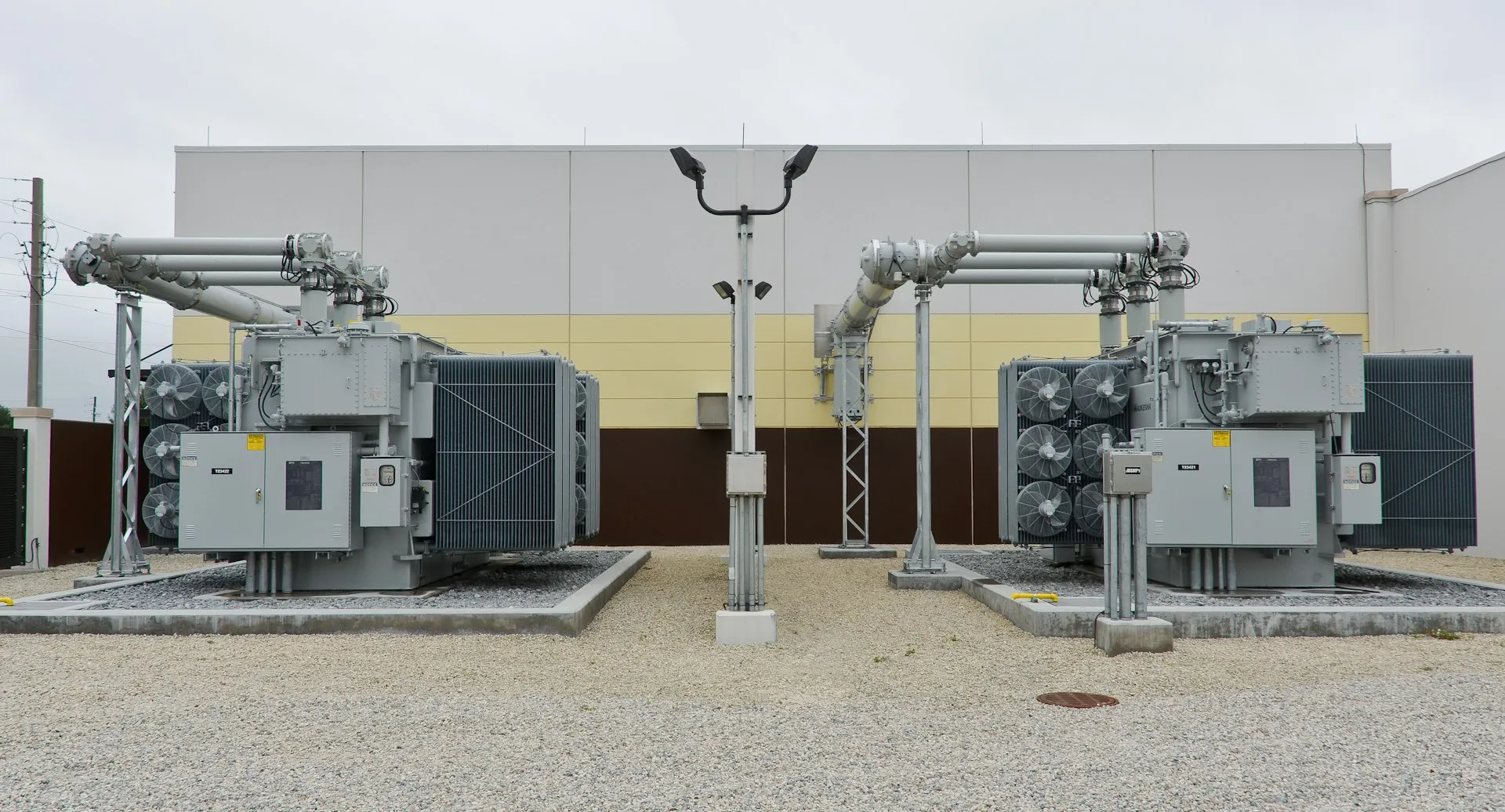
Match the type to the actual exposure, not the worst case imaginable. Indoor switchgear rooms and electrical closets are usually Type 1 or Type 12. General outdoor gear — pad-mounted transformers, distribution cabinets, most pad-mounted switchgear — is typically Type 3R. Sites with washdown, salt fog, chemical mist or coastal humidity move to Type 4X, where the enclosure material matters as much as the seal. Vaults or below-grade locations that can flood justify Type 6P. Over-specifying carries a real penalty too: a fully sealed enclosure traps heat, so a Type 4X box may need engineered cooling that a ventilated Type 3R would not, which affects the equipment’s usable rating.
What a buyer should specify
Start from the environment, not the catalog. The NEC (Article 110.28) and the CEC both provide enclosure-selection tables that tie a location’s hazards to acceptable types; use them to set the floor. Then:
- State the NEMA type explicitly (for example, “Type 3R” or “Type 4X”) and, where an international supply chain makes it useful, an equivalent IP code as a supplement — never in place of the type.
- Require third-party verification to UL 50 / UL 50E (or CSA) so the rating is tested, not merely claimed.
- Specify the corrosion class and material for outdoor or coastal duty — 316 stainless, aluminum or fiberglass — since two enclosures of the same type can behave very differently in salt fog.
- Account for thermal and icing effects, solar loading and ventilation, which change the enclosure’s real-world performance.
Building to the rating
Enclosure ratings are where a factory’s construction discipline shows: gasket selection, seam welding, hardware plating and door sealing separate a nameplate from field performance. Entogo builds outdoor-rated power equipment — outdoor unit substations, pad-mounted switchgear and three-phase pad-mounted transformers among them — designed and built to NEMA 250 and UL 50/50E, with UL (cULus)/CSA certification available on request. For project teams weighing enclosure and coordination questions together, the substations and power distribution and utilities practices scope the environment and the standard before metal is cut.