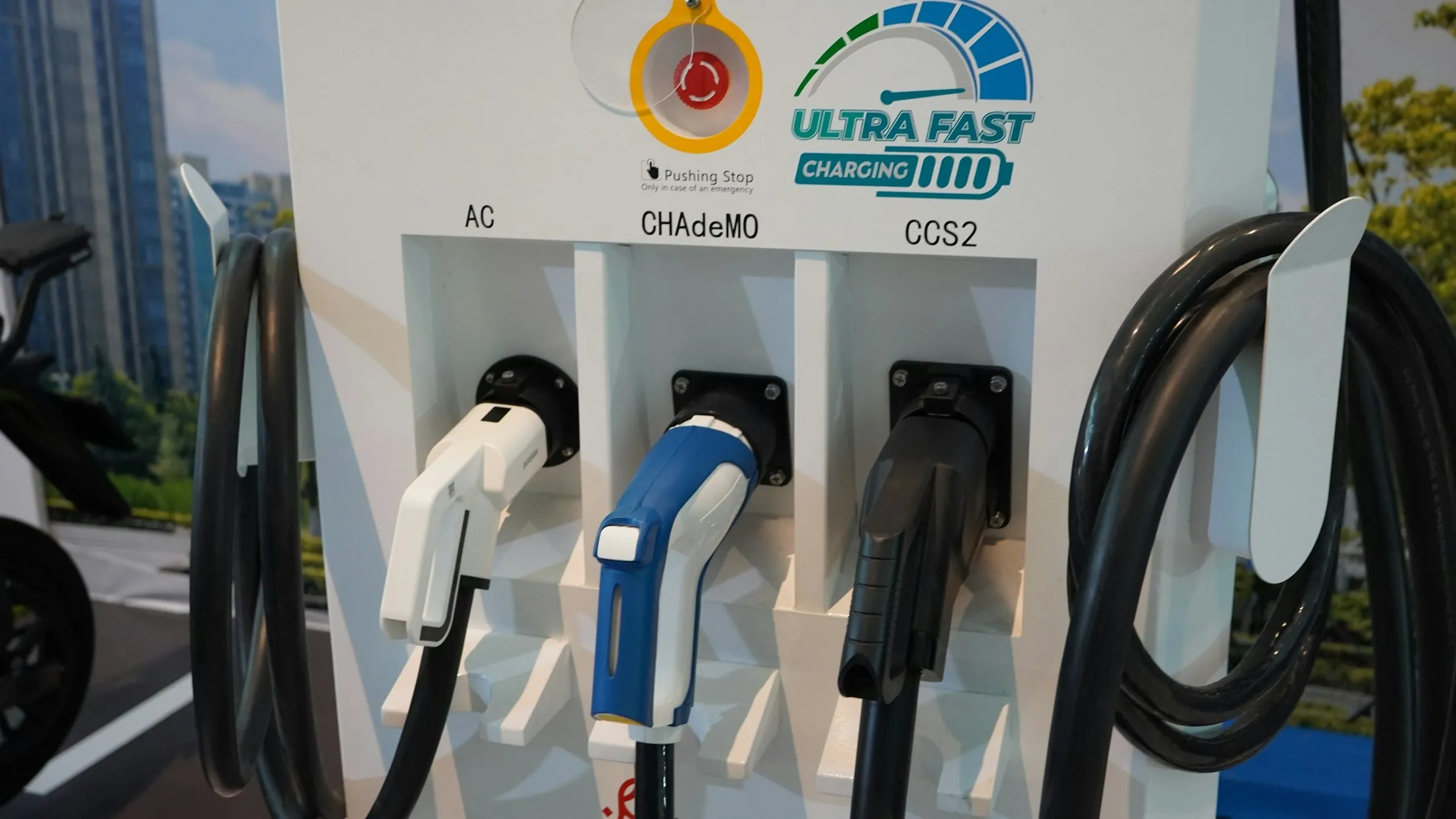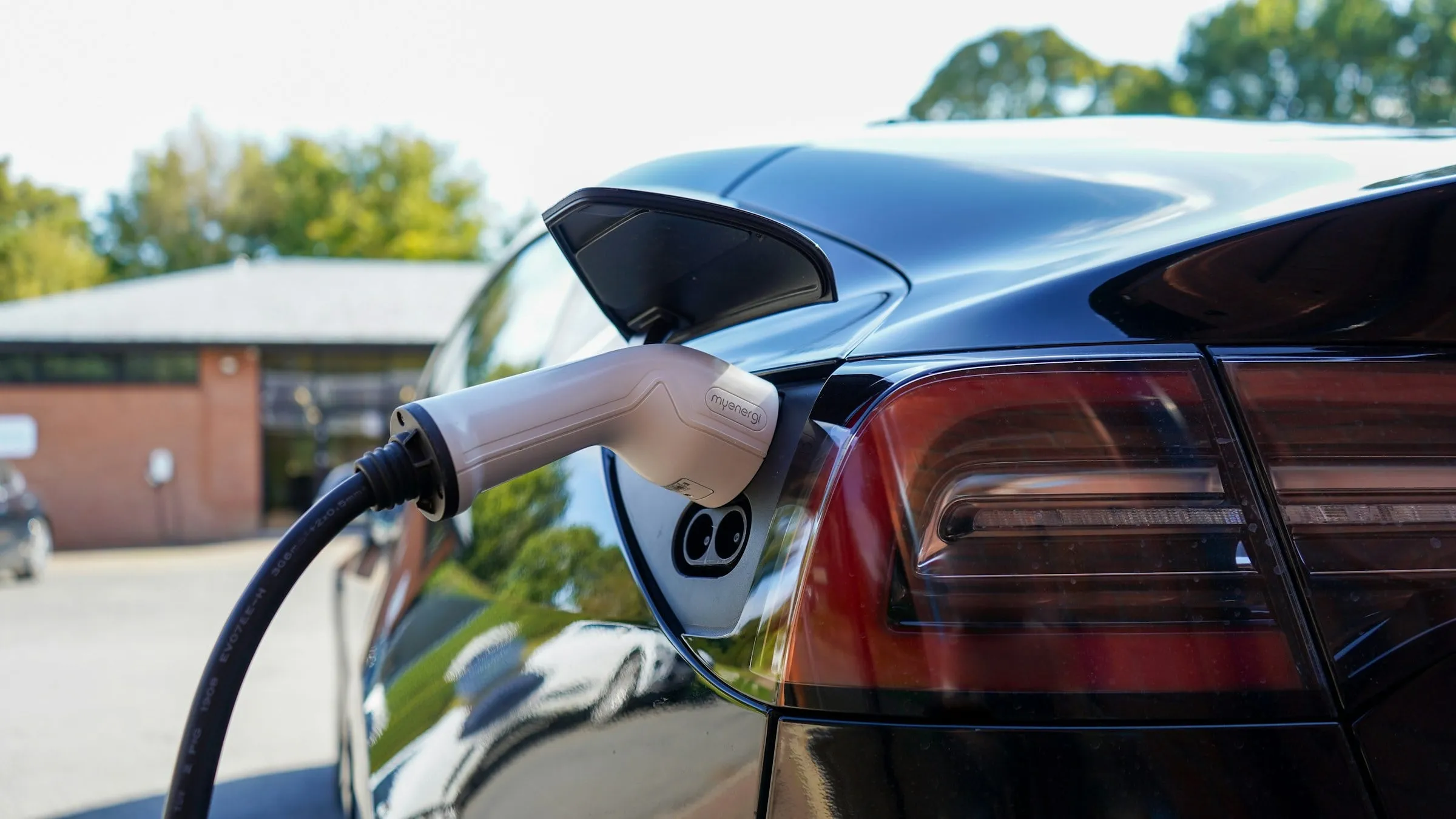
A Level 2 charger is the largest single load most houses will ever add: a 48 A unit draws 11,520 W at 240 V for hours at a time. Whether it fits depends on which load-calculation method the inspector accepts, and the NEC and the CEC give different answers for the same house. In the worked example below, a 2,400 sq ft home with a heat pump on a 200 A service calculates to 113.2 A with a 48 A charger under NEC 220.83(A) (2023), 142.0 A when the charger is counted at full nameplate, and 153.7 A under CEC Rule 8-200 (2024), which adds EVSE at 100 %. All three fit 200 A. Both NEC results still fit 150 A; the CEC result does not. On a 100 A service the metered method (NEC 220.87, CEC Rule 8-106 8)) or an energy management system is usually the only way to add a charger without an upgrade. These are the continuous-load, 7,200 VA floor and existing-peak rules that the EV charging service capacity calculator runs.
What load does a home EV charger add?
Three code rules turn a charger rating into a load calculation entry and a breaker size.
- NEC 220.57 counts each EVSE at the larger of 7,200 VA or its nameplate rating. LBNL’s summary of the 2023 changes puts it as “larger of 7.2 kW and nameplate rating”.
- NEC 625.40 requires an individual branch circuit for EVSE rated above 16 A or 120 V. NEC 625.41 sizes the overcurrent device at no less than 125 % of the EVSE current rating, because NEC 625.42 treats EVSE as a continuous load.
- NEC 625.43 requires a readily accessible disconnect for EVSE rated above 60 A. CEC Rule 86-304 1) sets the same 60 A threshold in Canada.
In Canada, CEC Rule 86-300 1) requires a separate branch circuit. Rule 86-302 treats the EVSE circuit as a continuous load for Rule 8-104 (CEC 8-200 3) carves only the dwelling total out of it), so the circuit is loaded to 80 % of its rating. That is the same arithmetic as the NEC 125 %, since 1 ÷ 0.80 = 1.25. ESA Bulletin 86-1-7 uses a 48 A setting on a 60 A circuit as its example of an installation that needs no separate disconnect.
P = I × V OCPD ≥ 1.25 × I(EVSE), rounded up to the next standard rating (NEC 240.6(A))
| EVSE rating | Power at 240 V | NEC 220.57 load | CEC 8-200 load | Min. OCPD (× 1.25) | Breaker | Separate disconnect |
|---|---|---|---|---|---|---|
| 16 A | 3,840 W | 7,200 VA | 3,840 W | 20 A | 20 A | No |
| 24 A | 5,760 W | 7,200 VA | 5,760 W | 30 A | 30 A | No |
| 32 A | 7,680 W | 7,680 VA | 7,680 W | 40 A | 40 A | No |
| 40 A | 9,600 W | 9,600 VA | 9,600 W | 50 A | 50 A | No |
| 48 A | 11,520 W | 11,520 VA | 11,520 W | 60 A | 60 A | No |
| 50 A | 12,000 W | 12,000 VA | 12,000 W | 62.5 A | 70 A | No |
| 64 A | 15,360 W | 15,360 VA | 15,360 W | 80 A | 80 A | Yes (> 60 A) |
| 80 A | 19,200 W | 19,200 VA | 19,200 W | 100 A | 100 A | Yes (> 60 A) |
The 7,200 VA floor matters only below 30 A (7,200 ÷ 240 = 30 A). From 32 A upward, the NEC and CEC enter the same watts. The codes diverge in the demand factor applied afterwards. Commercial and multi-unit garages follow a different rule set, covered in EV charging load management without a service upgrade. The AC-versus-DC choice is covered in AC vs. DC EV charging.
Which load calculation method applies to an existing house?
An existing dwelling has three routes in the NEC and two in the CEC. The route sets the size of the answer more than the charger does.
| Method | Clause | Basis | Demand treatment of the charger | Best when |
|---|---|---|---|---|
| Optional, existing dwelling | NEC 220.83(A) | Nameplate inventory | Inside the remainder at 40 % (2023 text) | No new HVAC, nameplates recorded |
| Optional, new HVAC added | NEC 220.83(B) | Nameplate inventory | 40 % remainder; new HVAC at 100 % | Heat pump and charger added together |
| Metered existing load | NEC 220.87 | 1 year of maximum demand × 1.25 | New load at 100 % | One or two loads added |
| Single dwelling calculated load | CEC 8-200 1) | Floor area + listed loads | 100 % (8-200 1) a) vi)) | Default in Canada |
| Measured maximum demand | CEC 8-106 8) | 12-month measured peak (TSBC adds 25 %) | 100 %, added to the peak | Utility data available |
LBNL summarizes NEC 220.83 as “100% of first 8,000 w + 40% of remaining loads (including hvac)” when no new HVAC is installed. When new HVAC is added, the larger of the heating or cooling load is taken at 100 % on top. Whether a new charger may sit inside the 40 % remainder is an AHJ question. The sources reviewed do not settle it, and a conservative reviewer may add the charger at 100 %. LBNL also reports proposals for NEC 2026 that revise the existing-dwelling method with explicit EVSE treatment, so check the edition the AHJ enforces. Both readings appear in the results table below.
Worked example: a 48 A charger on a 200 A house with a heat pump
The house is 2,400 sq ft (about 223 m²) on a 120/240 V, 200 A service. It has a 12 kW range, a 5 kW dryer, a 4.5 kW tank water heater, a 1.2 kW dishwasher and a heat pump whose air handler includes 5 kW backup strips, for 10 kVA of nameplate HVAC. No new HVAC is planned, so NEC 220.83(A) applies.
L(calc) = 8,000 + 0.40 × (L(total) − 8,000) I = L(calc) ÷ 240 V
- General lighting and receptacles at 3 VA/sq ft: 3 × 2,400 = 7,200 VA.
- Small-appliance and laundry circuits at 1,500 VA each (NEC 220.52): 3 × 1,500 = 4,500 VA.
- Fixed appliances and HVAC at nameplate: 12,000 + 5,000 + 4,500 + 1,200 + 10,000 = 32,700 VA. Existing total = 7,200 + 4,500 + 32,700 = 44,400 VA.
- Charger under NEC 220.57: 48 A × 240 V = 11,520 VA, which is above 7,200 VA, so 11,520 VA counts. New total = 44,400 + 11,520 = 55,920 VA.
- Demand: 8,000 × 1.00 = 8,000 VA, plus (55,920 − 8,000) × 0.40 = 47,920 × 0.40 = 19,168 VA. Calculated load = 27,168 VA.
- Service current: 27,168 ÷ 240 = 113.2 A, against a 200 A rating.
- Branch circuit under NEC 625.41: 48 × 1.25 = 60 A breaker.
NEC 220.83(A) service current with a 48 A charger
I = (8000 + 0.4 * (Lx + Pev - 8000)) / V
I = A
If the AHJ requires the charger at 100 % outside the 40 % remainder, the existing house is 8,000 + 0.40 × (44,400 − 8,000) = 22,560 VA. Adding 11,520 VA gives 34,080 VA, and 34,080 ÷ 240 = 142.0 A.
NEC 220.83 with the charger added at 100 %
I = (8000 + 0.4 * (Lx - 8000) + Pev) / V
I = A
What does the same house look like under CEC Rule 8-200?
Canada calculates a single dwelling from floor area plus listed loads. Rule 8-200 1) a) gives a basic load of 5,000 W for the first 90 m² and 1,000 W for each additional 90 m² or portion. A range takes 6,000 W plus 40 % of any rating above 12 kW. Loads over 1,500 W not otherwise listed take 25 % when a range is provided. EVSE is added at 100 % “except as permitted by Rule 8-106 11)”. Rule 8-200 1) b) sets a floor of 24,000 W for houses of 80 m² or more.
- Basic load: 223 − 90 = 133 m², which is two 90 m² portions, so 5,000 + 2 × 1,000 = 7,000 W.
- Space heating under Section 62 (first 10 kW at 100 %, balance at 75 %): 10,000 W. Cooling uses the same heat pump, subject to Rule 8-106 3).
- Range: 12 kW does not exceed 12 kW, so 6,000 W.
- Water heater and dryer at 25 %: 0.25 × 4,500 + 0.25 × 5,000 = 1,125 + 1,250 = 2,375 W. The 1,200 W dishwasher is under 1,500 W and sits inside the basic load.
- House without charger: 7,000 + 10,000 + 6,000 + 2,375 = 25,375 W, which beats the 24,000 W floor. 25,375 ÷ 240 = 105.7 A.
- Charger at 100 %: 25,375 + 11,520 = 36,895 W, and 36,895 ÷ 240 = 153.7 A.
CEC Rule 8-200 service current with a 48 A charger
I = (Lh + Pev) / V
I = A
Where Canada differs. The CEC has no 40 % remainder for the charger. That one difference moves the same house from 113.2 A to 153.7 A. CEC Rule 8-200 3) states that the total calculated load “shall not be considered to be a continuous load for application of Rule 8-104”, so 153.7 A is compared with the full 200 A. The NEC uses 125 % on the branch circuit. Canada uses the 80 % rule of Rule 8-104 on the same circuit through Rule 86-302. Both produce a 60 A breaker for 48 A.
Results: which charger fits which service?
Same house, five charger ratings, three calculations. Figures are service amperes at 240 V.
| Charger | NEC 220.83 (40 % remainder) | NEC 220.83 (charger at 100 %) | CEC 8-200 | Fits 150 A? (NEC / NEC 100 % / CEC) | Fits 200 A? |
|---|---|---|---|---|---|
| 32 A (7,680 VA) | 106.8 A | 126.0 A | 137.7 A | Yes / Yes / Yes | Yes |
| 40 A (9,600 VA) | 110.0 A | 134.0 A | 145.7 A | Yes / Yes / Yes | Yes |
| 48 A (11,520 VA) | 113.2 A | 142.0 A | 153.7 A | Yes / Yes / No | Yes |
| 50 A (12,000 VA) | 114.0 A | 144.0 A | 155.7 A | Yes / Yes / No | Yes |
| 80 A (19,200 VA) | 126.0 A | 174.0 A | 185.7 A | Yes / No / No | Yes |
The method matters more than the charger: the same 80 A unit is 126.0 A under one reading of NEC 220.83 and 185.7 A in Canada.
What if the panel is only 100 A?
Before any charger, the same house calculates to 94.0 A on NEC 220.83 and 105.7 A on CEC 8-200. Even a 32 A charger takes it to 106.8 A and 137.7 A, so a 100 A service fails both and the metered route comes next.
NEC 220.87 uses one year of maximum demand data plus 25 %. CEC Rule 8-106 8) adds the new load “to the maximum demand load of the existing installation as measured over the most recent 12-month period”. Technical Safety BC applies a 25 % safety factor to the utility’s highest hourly kWh reading.
I = (1.25 × P(peak) + P(EVSE)) ÷ V
- Utility 12-month peak: 10.4 kW.
- Safety factor: 10,400 × 1.25 = 13,000 W, and 13,000 ÷ 240 = 54.2 A.
- 40 A charger at 100 %: 13,000 + 9,600 = 22,600 W, and 22,600 ÷ 240 = 94.2 A. This fits 100 A.
- 48 A charger at 100 %: 13,000 + 11,520 = 24,520 W, and 24,520 ÷ 240 = 102.2 A. This does not fit.
- Technical Safety BC’s own 200 A example: 22.29 kWh in the peak hour × 1.25 = 27.86 kW average, and 27,860 ÷ 240 = 116 A, which leaves 84 A for added loads.
Metered method with a 40 A charger
I = (1.25 * Pk + Pev) / V
I = A
Technical Safety BC requires the service to be labelled with the augmented load and the date of the calculation. Any further load addition needs a fresh 12 months of data.
When can load management replace a service upgrade?
When the charger does not fit, an energy management system is the code path that avoids a new service. Under NEC 625.42(A) and 750.30(C)(1)(1), the maximum load the energy management system permits becomes the EVSE load used to size feeders and service conductors. NEC 625.42(B) lets adjustable EVSE be rated at its labelled setting. In Canada, CEC Rule 8-106 10) limits EMS-controlled EVSE demand to the EMS maximum. Under Rule 8-106 11), an EMS that monitors the service removes the EVSE from the calculated load (ESA 86-1-7). ESA accepts reduced settings only on fixed-in-place EVSE with a permanent label and restricted access. For a single-dwelling EVEMS certified to other product standards, Technical Safety BC requires a qualified person’s load calculation at permit and verification that the EVEMS establishes a fail-safe state. Setpoint arithmetic for larger sites is in the load management article.
NEC vs CEC reference for home chargers
| Item | NEC (2023) | CEC (2024) |
|---|---|---|
| EVSE load entry | Larger of 7,200 VA or nameplate (220.57) | Nameplate at 100 % (8-200 1) a) vi)) |
| Existing dwelling demand | First 8 kVA at 100 %, rest at 40 % (220.83) | No 40 % tier for EVSE |
| Metered alternative | 1-year max demand × 1.25 (220.87) | 12-month max demand + new load (8-106 8)); TSBC adds 25 % |
| Minimum calculated load | n/a in 220.83 | 24,000 W (≥ 80 m²) or 14,400 W (< 80 m²) (8-200 1) b)) |
| Branch circuit | Individual circuit above 16 A or 120 V (625.40) | Separate branch circuit (86-300 1)) |
| Overcurrent device | ≥ 125 % of EVSE rating (625.41) | Continuous under 8-104 via 86-302 (80 %) |
| Service continuous treatment | No continuous multiplier in 220.83 itself | Total not continuous (8-200 3)) |
| Disconnect | EVSE rated > 60 A (625.43) | EVSE rated > 60 A or > 150 V to ground (86-304 1)) |
| Load management | EMS maximum is the EVSE load (625.42(A), 750.30) | 8-106 10) and 11); 8-500 |
| 50 A receptacle | Per 625.41 sizing | 14-50R or 6-50R on 50 A device (26-700, ESA 86-1-7) |
What to specify
- EVSE rating and setting — nameplate amperes and any labelled reduced setting (NEC 625.42(B); ESA 86-1-7); from the charger nameplate.
- Branch breaker — at least 1.25 × EVSE rating, next standard size (NEC 625.41, 240.6(A); CEC 8-104, 86-302); from the first table.
- Calculation method — 220.83(A), 220.83(B) or 220.87 in the US; 8-200 1) or 8-106 8) in Canada; from a nameplate inventory or utility data.
- Existing peak demand — highest 12-month demand × 1.25 (NEC 220.87; CEC 8-106 8) with TSBC’s 25 % factor); from the utility letter or smart-meter download, never a monthly bill total.
- Service current versus rating — amperes at 240 V against the main breaker (CEC 8-200 3)); from the service capacity calculator and the panel label.
- Load management — EMS type, monitoring point and fail-safe behaviour (NEC 625.42(A), 750.30; CEC 8-106 10) and 11), 8-500); from the EMS listing and commissioning record.
Common mistakes
- Using 7,200 VA for an 11,520 VA charger. NEC 220.57 sets a floor, not a fixed value. A 48 A unit is 11,520 VA, and using 7,200 VA understates the 220.83 result by 0.40 × 4,320 ÷ 240 = 7.2 A, or by 18.0 A when the charger is counted at 100 %. The plan reviewer catches it against the nameplate.
- Applying the NEC 40 % remainder in Canada. CEC Rule 8-200 1) a) vi) adds EVSE at 100 %. The example house is 153.7 A in Canada, not 113.2 A, a 40.5 A difference that decides whether a 150 A service passes.
- Sizing the breaker at the charger rating. A 48 A charger on a 50 A breaker violates NEC 625.41 and CEC 8-104. The correct device is 48 × 1.25 = 60 A.
- Reading a monthly kWh total as peak demand. NEC 220.87 and CEC 8-106 8) both need maximum demand. Technical Safety BC applies 25 % to the highest hourly reading, so 22.29 kWh becomes 116 A, not 22.29 kWh spread across the month.
- Applying 125 % to the whole house. CEC Rule 8-200 3) states that the dwelling total is not continuous. Multiplying 153.7 A by 1.25 gives 192.2 A and makes a passing service look marginal.
- Ignoring the disconnect above 60 A. An 80 A charger needs a readily accessible disconnect under NEC 625.43 and CEC 86-304 1). ESA’s example requires one for a 64 A setting on an 80 A circuit.
Where Entogo fits
Entogo supplies Level 2 AC chargers and the distribution equipment behind them from its own source factory. The Silk AC Home Charger (North America) is rated 240 V AC, 40 A plug-in on NEMA 14-50P (10 kW) or 50 A hardwired (12 kW), with intelligent load management. By the rules above, the hardwired setting needs at least 50 × 1.25 = 62.5 A, so a 70 A breaker. Warranty is a 36-month minimum, extending up to 10 years on major power equipment, with a one-business-day service response. Entogo chargers are designed and built to UL 2594 and CSA C22.2 No. 280; UL (cULus)/CSA certifiable on request.
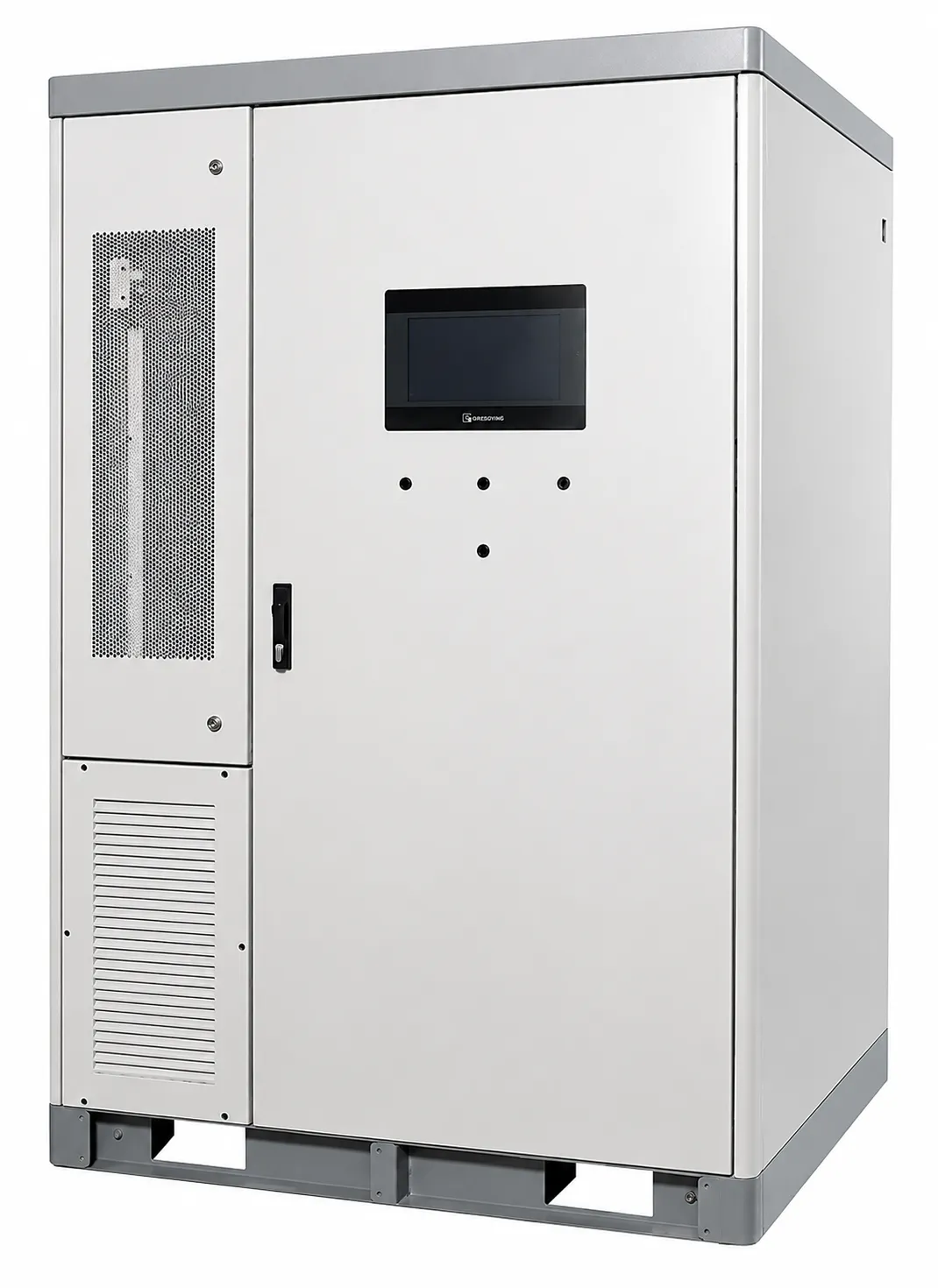
For multi-unit and fleet sites, the EV charging infrastructure solution pairs chargers with distribution switchboards and panelboards and single-phase pad-mounted transformers. Run the house or site through the EV charging service capacity calculator before choosing a charger rating. For transformer-level sizing, see how to size a transformer.
The bottom line
A home charger fits or fails on the load calculation method, not on its own amperes. Start with the nameplate: 48 A means 11,520 VA and a 60 A breaker. Run NEC 220.83 or CEC 8-200 against the service rating, and expect Canada to land about 40 A higher for a 48 A charger on the same house, because EVSE carries no 40 % tier. Where the calculation fails, 12 months of peak data × 1.25 (NEC 220.87; CEC 8-106 8) with the TSBC 25 % factor) or an energy management system (NEC 625.42(A), CEC 8-106 10) and 11)) usually avoids the service upgrade.