What problem does a microgrid actually solve?
A microgrid is a local group of electrical loads and on-site generation — typically solar, battery storage, and sometimes a generator — that can operate connected to the utility grid or disconnect and run on its own. That second mode, called islanding, is the reason most sites consider one.
The case starts with the cost of an outage. U.S. electricity customers averaged about five and one-half hours of interruptions in 2022, and the duration has held around two hours a year once major events are excluded. For an office that is an inconvenience; for a data center, cold-storage warehouse, hospital, or continuous-process plant, even a short interruption can mean spoiled product, lost production, or a safety event. A microgrid is a way to decouple a site’s critical loads from grid reliability.
A second driver is capacity. Where a utility cannot deliver additional service quickly, adding local generation and storage behind the meter can free up headroom for new load — an EV depot, an added production line, or a building expansion — without waiting on a full service upgrade. In both cases the microgrid is infrastructure, not a gadget.
How a microgrid works — grid-connected, islanded, and the transition
The hard engineering in a microgrid is not the batteries or the panels; it is the transition between operating modes and holding the island stable once separated.
Grid-forming vs grid-following inverters
Ordinary grid-tied inverters are grid-following: they synchronize to the grid’s existing voltage and frequency and inject current. Remove the grid and they have nothing to follow, so they shut down. Islanding requires at least one grid-forming source that actively establishes voltage and frequency as the reference for everything else on the island. On a battery-based microgrid, that role falls to a grid-forming inverter such as a DC-coupled grid-forming hybrid system, paired with a battery energy storage system sized to carry the critical load through the outage window.
| Attribute | Grid-following inverter | Grid-forming inverter |
|---|---|---|
| Voltage and frequency | Follows the grid | Establishes its own |
| When the grid is lost | Shuts down | Continues, holds the island |
| Role in a microgrid | Supporting source | Islanding leader |
| Typical use | Standard grid-tied PV and storage | Backup and islanded operation |
The microgrid controller
Above the inverters sits a microgrid controller. IEEE 2030.7-2017 specifies the microgrid energy management functions common to all microgrids regardless of topology or jurisdiction — coordinating on-site resources and executing the seamless transition between grid-connected and islanded operation. Its companion, IEEE 2030.8-2018, defines how those controllers are tested. The controller decides which sources run, sheds non-critical load if generation falls short, and re-synchronizes to the utility before reconnecting.
Where a microgrid makes sense
A microgrid is rarely the cheapest way to add power, so it earns its place where reliability or capacity has real value:
- High outage cost — data centers, healthcare, cold storage, water treatment, and continuous manufacturing.
- Weak or constrained grid — sites at the end of a long feeder, or where a utility upgrade is slow or expensive.
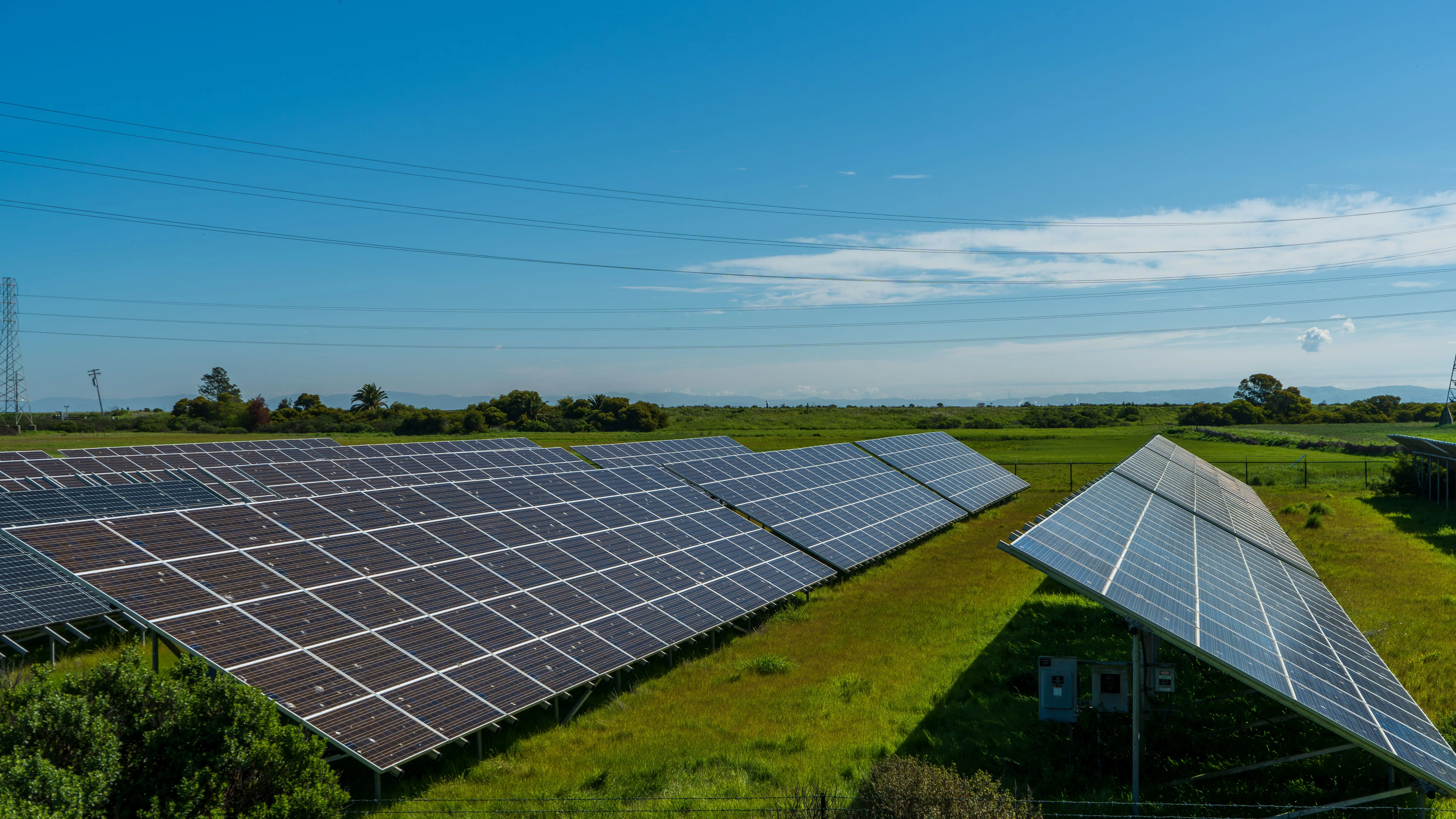
- On-site renewables already present — a commercial and industrial storage or solar-storage-charging installation is already most of the hardware; islanding controls turn it into a microgrid.
- Demand and rate management — while grid-connected, the same storage cuts demand charges and shifts energy, so the asset earns its keep every day, not only during outages.
Where the only requirement is short-duration backup for a handful of circuits, a transfer switch and generator may be enough. The microgrid case strengthens as the required runtime, the share of critical load, and the value of clean or quiet operation all rise.
What a buyer should specify
Islanding, protection, and interconnection
The point of common coupling needs protection and controls the utility will accept. Under IEEE 1547, a grid-connected resource must detect an unintentional island and cease to energize the grid within two seconds, so intentional islanding has to be a deliberately engineered, utility-approved scheme — not simply leaving inverters online when the grid drops. Specify the interconnection point, the islanding and reconnection logic, and the protection coordination up front. This is where a renewable grid connection scope and equipment such as a new-energy grid-connection cabinet and metal-clad switchgear come together.
Standards, sizing, and safety
Inverters should be designed and built to UL 1741 for their grid-support functions, storage should follow NFPA 855 and UL 9540A for fire safety, and interconnection should be governed by IEEE 1547. Size the battery to the critical-load profile and the required islanded runtime, not to a round nameplate number. For larger sites, a large-scale grid-connected and off-grid system or a containerized battery energy storage system packages the storage, power conversion, and controls as a coordinated block.
Bringing it together
A microgrid is a systems problem — storage, grid-forming conversion, switchgear, protection, and controls that must behave as one during the fraction of a second the utility disappears. Entogo builds these components in its own vertically integrated factory and supplies them as an engineered package, designed and built to the governing IEEE, UL, and NFPA standards and UL (cULus) or CSA certifiable on request, so a utility or commercial buyer can specify one coordinated system rather than integrating parts from a dozen vendors. Because the equipment is manufactured in-house with scalable capacity, delivery avoids the long queues common to today’s transformer and switchgear market. To scope a site, start at /contact.