Entogo
Voltage Regulation & Power Quality
Feeder voltage regulation, low-voltage stabilization and reactive-power compensation perform different duties.
A feeder step voltage regulator controls network voltage; an industrial stabilizer controls the supply to connected loads; a capacitor bank compensates reactive power. Describe the measured problem first, then provide voltage variation, load profile and the required control response.
Voltage Regulation & Power Quality
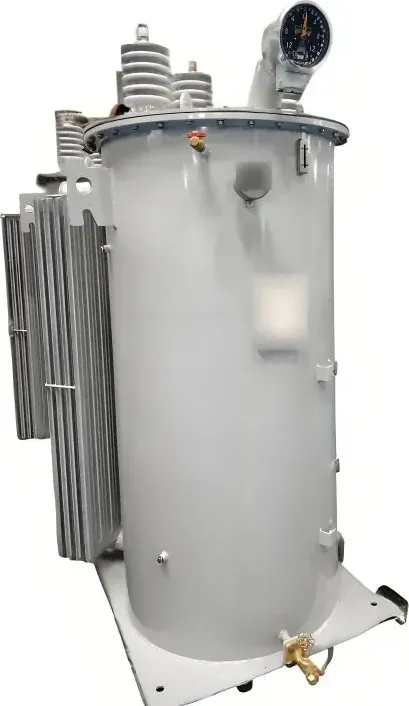
Step Voltage Regulator (SVR)
Entogo supplies step voltage regulators for feeder voltage control. Reference configurations span 2.5–19.92 kV; select line current, insulation, connection and controller together rather than treating regulator kVA as total feeder capacity.
View
Voltage Regulation & Power Quality
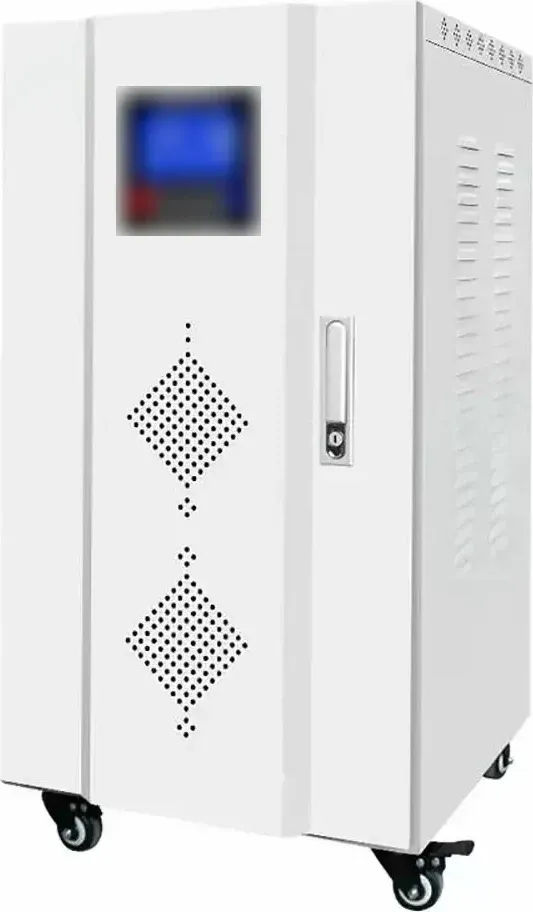
Automatic Voltage Stabilizer (AVR)
Entogo supplies industrial automatic voltage stabilizers for loads exposed to supply variation. Specify the full input-voltage range, output tolerance, load current, starting duty and bypass arrangement before selecting the kVA.
View

Voltage Regulation & Power Quality
Automatic Power-Factor-Correction Capacitor Bank
An automatic power-factor-correction (PFC) capacitor bank for 480 V, 60 Hz systems — stepped, controller-switched kVAR with detuned harmonic-filter reactors to raise power factor, cut demand charges and free up transformer capacity. Designed to UL 810, IEEE 18 and NEMA CP-1; UL/CSA certifiable.
View
Design references
Power & Distribution
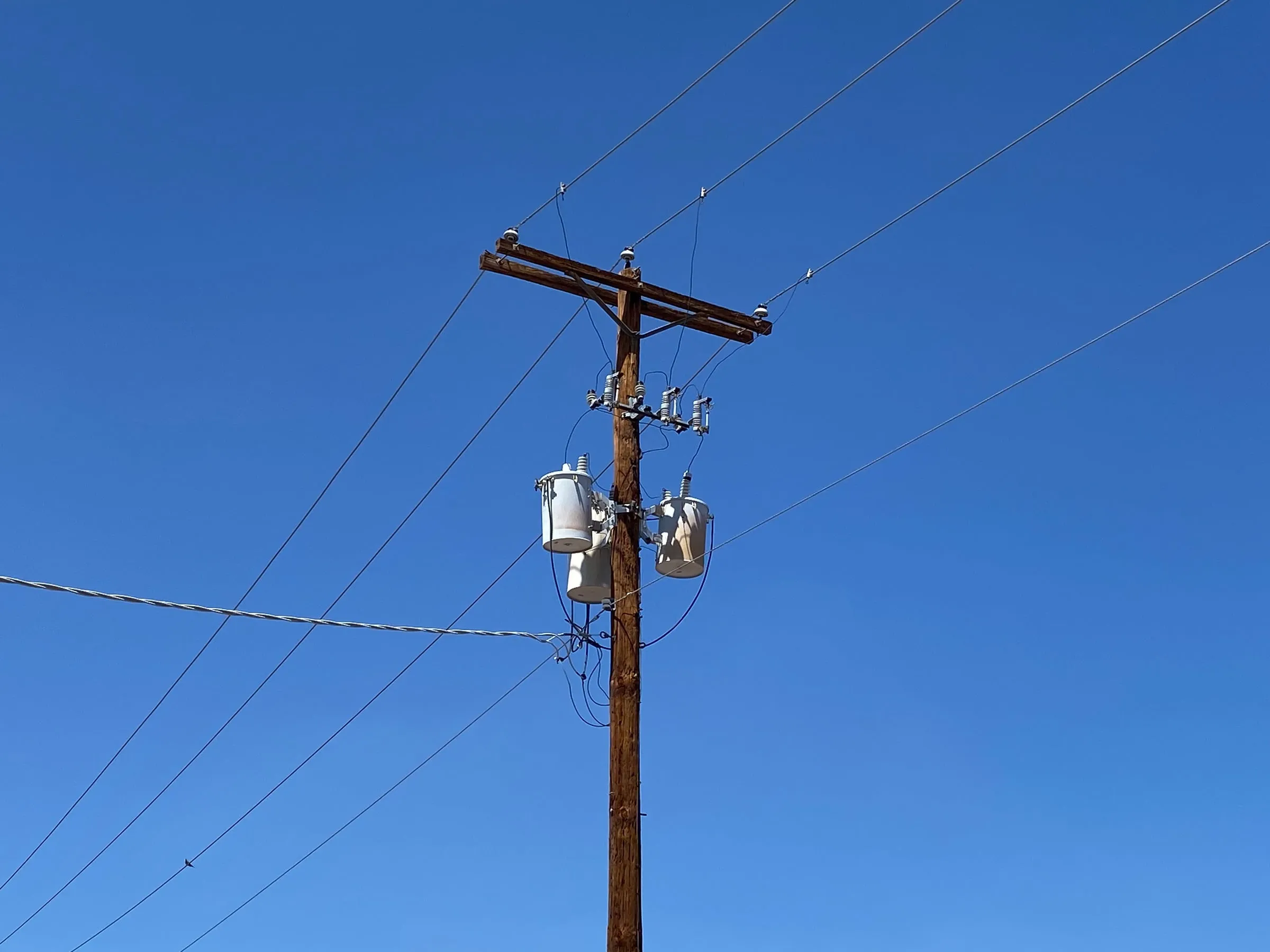
De-energized taps or a load tap changer? Specifying transformer voltage regulation
Transformer regulation is %R cos θ + %X sin θ plus a small quadratic term. A 1500 kVA, 5.75 %Z unit at 0.85 PF drops 3.85 %, so a 13.3 to 14.0 kV primary needs the 13 455 V tap to hold 456 to 504 V. The full ANSI C84.1 Range A primary swing needs an OLTC or a step regulator.
View
Power & Distribution
Power factor correction: how to size a capacitor bank and clear a utility penalty
Power-factor capacitor sizing uses Qc = kW x (tan phi1 - tan phi2). An 800 kW load at 0.78 power factor needs 379 kVAR to reach 0.95, so a 400 kVAR bank is specified. BC Hydro's graduated surcharge reaches 16 percent below 80, Hydro One bills on 90 per cent of kVA, and PG&E adjusts 0.06 percent per point off 85.
View
Power Quality
Harmonic distortion: what IEEE 519 requires and how to meet it
Harmonic distortion from VFDs, EV chargers, and data-center power supplies can breach IEEE 519 limits and quietly overheat neutrals, transformers, and switchgear. This guide explains the 519-2022 voltage and current limits and how to specify mitigation before it becomes a field problem.
View
For Canadian and US projects, include the utility specification, service frequency and required approvals. State whether the order is for the transformer alone or an integrated equipment package.
Discuss your equipment requirements
Browse equipment families
Compare equipment by function and installation. Product pages identify the available scope and the information needed for a quotation.