Why does the inverter control mode matter for a battery storage project?
For a century the grid’s voltage and frequency were “formed” by the spinning mass of synchronous generators. Their rotating inertia set a stable reference that every other device could follow. A battery has no spinning mass; it connects through a power-electronic inverter, and the way that inverter is controlled decides whether the battery merely follows the grid or helps hold it up. Two control philosophies dominate today’s equipment: grid-following and grid-forming. Choosing between them early shapes sizing, protection, interconnection studies, and cost, so it belongs in the specification rather than in a change order.
How do grid-following and grid-forming inverters differ?
Grid-following behaves like a current source
A grid-following (GFL) inverter measures the grid’s existing voltage and frequency — usually with a phase-locked loop — and injects current in step with it. IEEE Spectrum describes these units as devices that “operate only if they can ‘see’ an existing voltage and frequency on the grid that they can synchronize to.” That makes them simple and efficient for pushing power in and out, but it also means they contribute no inertia and cannot run when the grid reference disappears.
Grid-forming behaves like a voltage source
A grid-forming (GFM) inverter creates its own internal voltage reference and holds it. A U.S. Department of Energy technical report puts it precisely: a grid-forming resource’s controls “maintain an internal voltage phasor that is constant or nearly constant in the sub-transient to transient time frame.” Because it sets the reference instead of chasing it, a grid-forming battery can ride through a weak grid, keep an island energized, and even black-start a network — roles historically filled only by synchronous machines. A battery suits this duty because it can source or sink real power on demand to back the voltage it is holding.
Where does each control mode make sense?
On a strong grid, where a large fault current is available and the interconnection is stiff, grid-following is often all a project needs. Behind-the-meter peak-shaving, energy arbitrage, and frequency response on a robust distribution feeder are well served by a conventional grid-following battery energy storage system.
Grid-forming earns its added complexity where the grid is weak or absent:
- Islanding and resilience — a facility that must keep running through an outage needs a source that can form voltage on its own, the core of any microgrid or commercial and industrial storage project.
- Weak or high-renewable grids — system strength is measured by the short-circuit ratio, and grid-following units can become unstable as that strength falls. IEEE Spectrum notes that beyond roughly “60 to 70 percent” instantaneous renewable penetration, grid-following inverters alone struggle to stay stable.
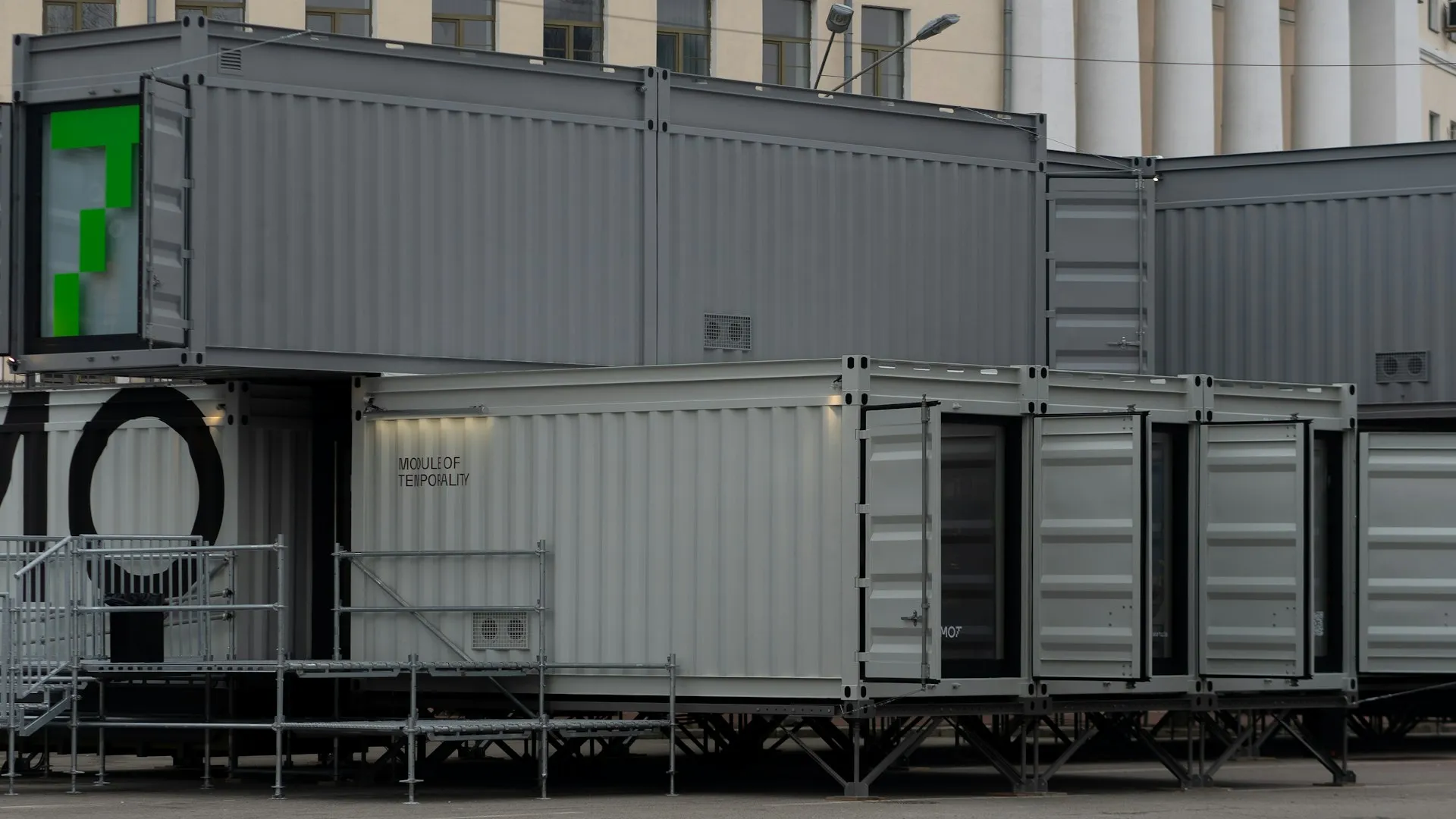
- Black start and remote sites — off-grid and edge-of-grid installations, such as a large-scale MW grid-connected and off-grid system or a containerized battery energy storage system, rely on forming their own reference.
For projects that pair generation, storage, and load behind one connection, a DC-coupled grid-forming hybrid system keeps the forming intelligence on the DC bus, and the point of common coupling is managed through a new-energy grid-connection cabinet.
What should a buyer specify?
Control mode is a system decision, not a checkbox, so tie it to the interconnection study and the governing standards:
- State the duty. Say whether the system must island, black-start, or stabilize a weak grid, or whether it will always operate on a stiff grid. That single answer usually settles grid-forming versus grid-following.
- Cite the governing standards as context. Distribution-connected storage is specified against IEEE 1547-2018 and UL 1741; resources interconnecting to transmission are specified against IEEE Std 2800-2022, the first interconnection-and-interoperability standard for inverter-based resources on the bulk system. Grid-forming functions are addressed by the emerging IEEE P2800.1 recommended practice.
- Size for fault and transient current. A grid-forming inverter must supply current on demand to hold its voltage during faults, so its rating and the battery behind it are engineered differently from a grid-following unit of the same nameplate.
- Confirm ride-through and protection coordination. Voltage and frequency ride-through settings, anti-islanding behavior, and how the inverter coordinates with upstream relaying all change with the control mode.
Bringing it together
Grid-following and grid-forming are not better or worse; they answer different questions. A strong-grid arbitrage project and an islanding microgrid need different inverters, and specifying the wrong one is expensive to unwind. Entogo builds battery storage and grid-connection equipment for both duties in its own factory — from utility-scale renewable grid connection to resilient sites served by utilities — designed and built to IEEE 1547, UL 1741, and IEEE 2800 as applicable; UL (cULus)/CSA certifiable on request. Matching control mode to the grid it will serve, backed by in-house engineering, keeps a project’s interconnection moving instead of waiting out the market’s long equipment queues.