Why does the cooling method decide a battery system’s lifespan?
Two battery energy storage systems can use identical cells and still deliver very different service lives, and the difference often comes down to how each moves heat. Lithium-ion cells age through chemical side reactions whose rate rises steeply with temperature, so a system that lets cells run hot — or lets some cells run hotter than others — quietly trades away cycle life the buyer already paid for.
The sensitivity is well documented. In controlled cycling, the capacity-fade rate of a lithium-ion cell after 260 cycles rose from 4.22% to 13.24% as cell temperature increased from 25 °C to 55 °C. Calendar aging follows the same curve: because the degradation reactions have an Arrhenius-type dependence on temperature, they accelerate roughly exponentially as cells warm. One 36-month storage study measured its worst degradation where high temperature and high charge coincided — a conductivity loss of 22.86% at 55 °C and 90% state of charge, against 2.5% at 25 °C and 10% state of charge — a reminder that heat and a high resting state of charge compound each other. The practical lesson is that keeping cells near a moderate setpoint, and keeping every cell close to that setpoint, is what protects the asset.
Delivering that is the job of the thermal-management system, and the two dominant approaches — forced-air cooling and liquid cooling — do it very differently.
How do air cooling and liquid cooling actually differ?
Air cooling
An air-cooled system moves conditioned air across the modules with fans, usually paired with an HVAC unit on the enclosure. Air has low heat capacity and low thermal conductivity, so it carries heat away slowly and unevenly: cells nearest the airflow run cooler than cells buried deeper in the pack, widening the cell-to-cell temperature spread. The advantage is mechanical simplicity — fewer moving parts, no coolant loop to seal or monitor, straightforward inspection and lower upfront cost. An air-cooled energy storage system is easy to service and forgiving to maintain.
Liquid cooling
A liquid-cooled system circulates a coolant, typically a water-glycol mix, through cold plates in close thermal contact with the modules. Liquid carries far more heat per unit volume than air, so it removes heat faster and holds cells within a tighter band — cell-to-cell gradients of a few degrees rather than the wider spread typical of forced air. That uniformity is what preserves cycle life in dense, hard-working systems, and the higher heat-rejection capacity lets designers pack more energy into the same footprint. A liquid-cooled energy storage system pays for that performance with added complexity: pumps, cold plates, a sealed coolant loop and leak management, and higher capital cost.
| Consideration | Air-cooled | Liquid-cooled |
|---|---|---|
| Temperature uniformity | Wider cell-to-cell spread | Tight, a few degrees |
| Energy density / footprint | Lower | Higher |
| System complexity | Simpler, fewer parts | Pumps, plates, coolant loop |
| Upfront cost | Lower | Higher |
| Best-fit duty | Light, shallow cycling | Heavy, deep or frequent cycling |
Where does each approach make sense?
Air cooling remains a sound fit for lower-density, lower-throughput installations: systems that cycle shallowly, sit in mild climates, or place the highest value on the simplest possible maintenance. For a small commercial peak-shaving or backup application where floor space is not the binding constraint, the added cost of a coolant loop is hard to justify.
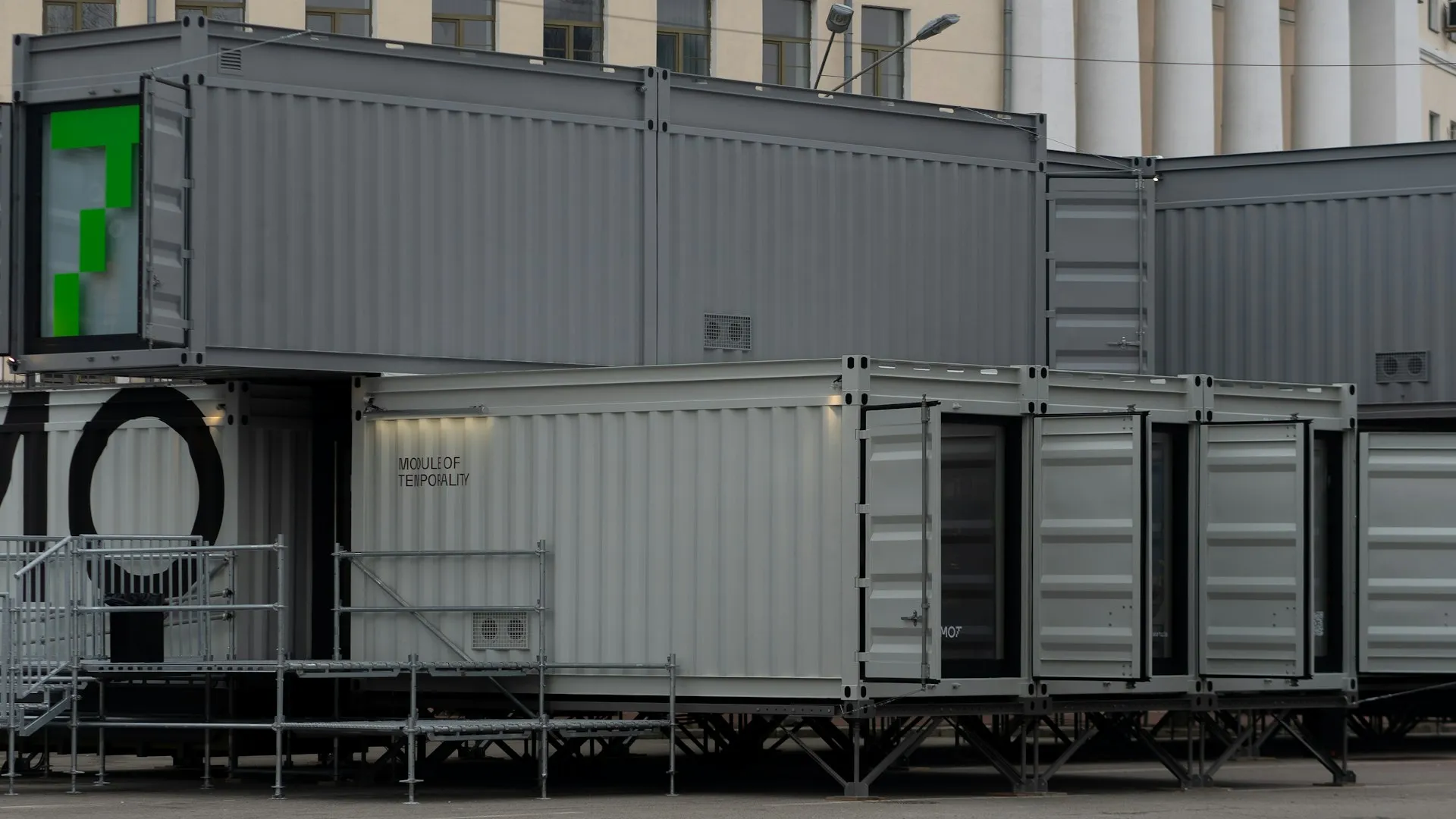
Liquid cooling has become the default for high-density, high-cycling deployments. Utility-scale sites, commercial and industrial systems doing daily arbitrage or aggressive peak-shaving, and data-center support all push cells hard and place a premium on both footprint and uptime — exactly the conditions where tighter temperature control pays back. A containerized battery energy storage system is where the difference shows most, because uniform cooling across hundreds of modules in a single enclosure is what keeps the whole string aging evenly. These trade-offs sit at the center of most commercial and industrial storage and data center projects.
What should a buyer specify?
Rather than starting from “air or liquid,” specify the outcomes the thermal system must hit and let the architecture follow:
- Operating temperature window and maximum cell-to-cell gradient across the full pack, not just an average, since uniformity drives even aging.
- Ambient design range for the site, including worst-case summer and winter, plus any need for heating in cold climates so cells are not charged below their safe temperature.
- Parasitic (auxiliary) load of the cooling system, which offsets round-trip efficiency and shows up on the meter every hour the system runs.
- Governing standards as integration context. A stationary battery energy storage system is designed and built to UL 9540 and tested against UL 9540A thermal-runaway methods, with installation, spacing and ventilation governed by NFPA 855; confirm the cooling design supports those requirements rather than fighting them.
- Warranty terms tied to thermal performance, since throughput and capacity guarantees usually assume the cells are held in their intended window.
- Serviceability of the specific design — access to fans, filters, pumps and coolant, and the leak-detection strategy for liquid systems.
A cooling choice made this way follows from the site’s duty cycle, climate and footprint instead of a blanket preference. Entogo builds both air-cooled and liquid-cooled storage in a vertically integrated factory — designed and built to UL 9540, tested against UL 9540A thermal-runaway methods, and installed to NFPA 855; UL (cULus)/CSA certifiable on request — with in-house engineering support to match the thermal architecture to a project’s real operating profile.