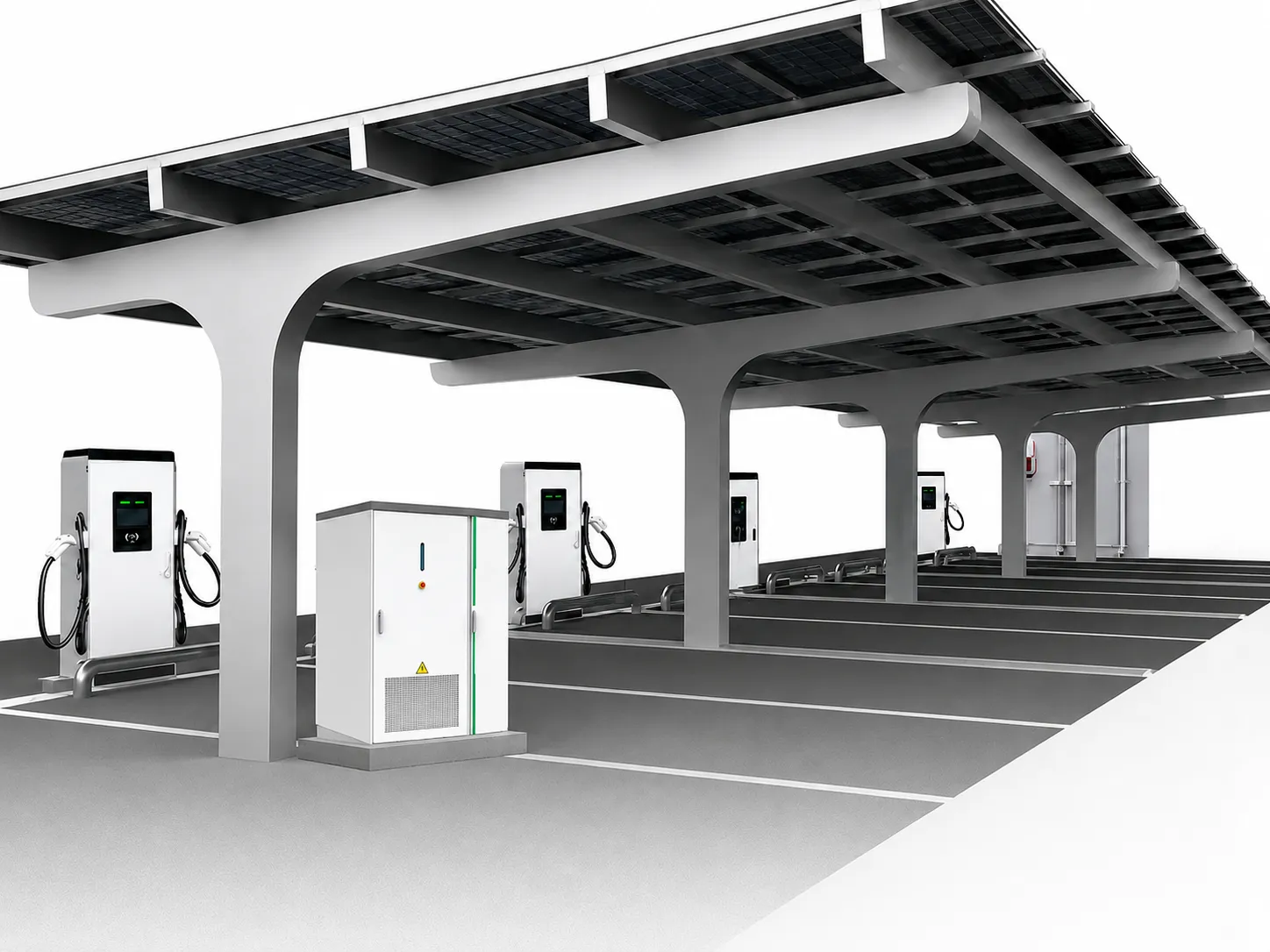
EV charging sites face a recurring problem: the grid connection that a property already has is rarely sized for several DC fast chargers running at once. The conventional fix — a utility service upgrade — is slow and expensive, and it sizes the site for a peak that may only occur for a few minutes a day. A solar-storage-charging system takes a different route. It places generation, storage and charging behind one connection point and lets them work as a single, coordinated system.
The three layers and how they interact
A solar-storage-charging system has three functional layers:
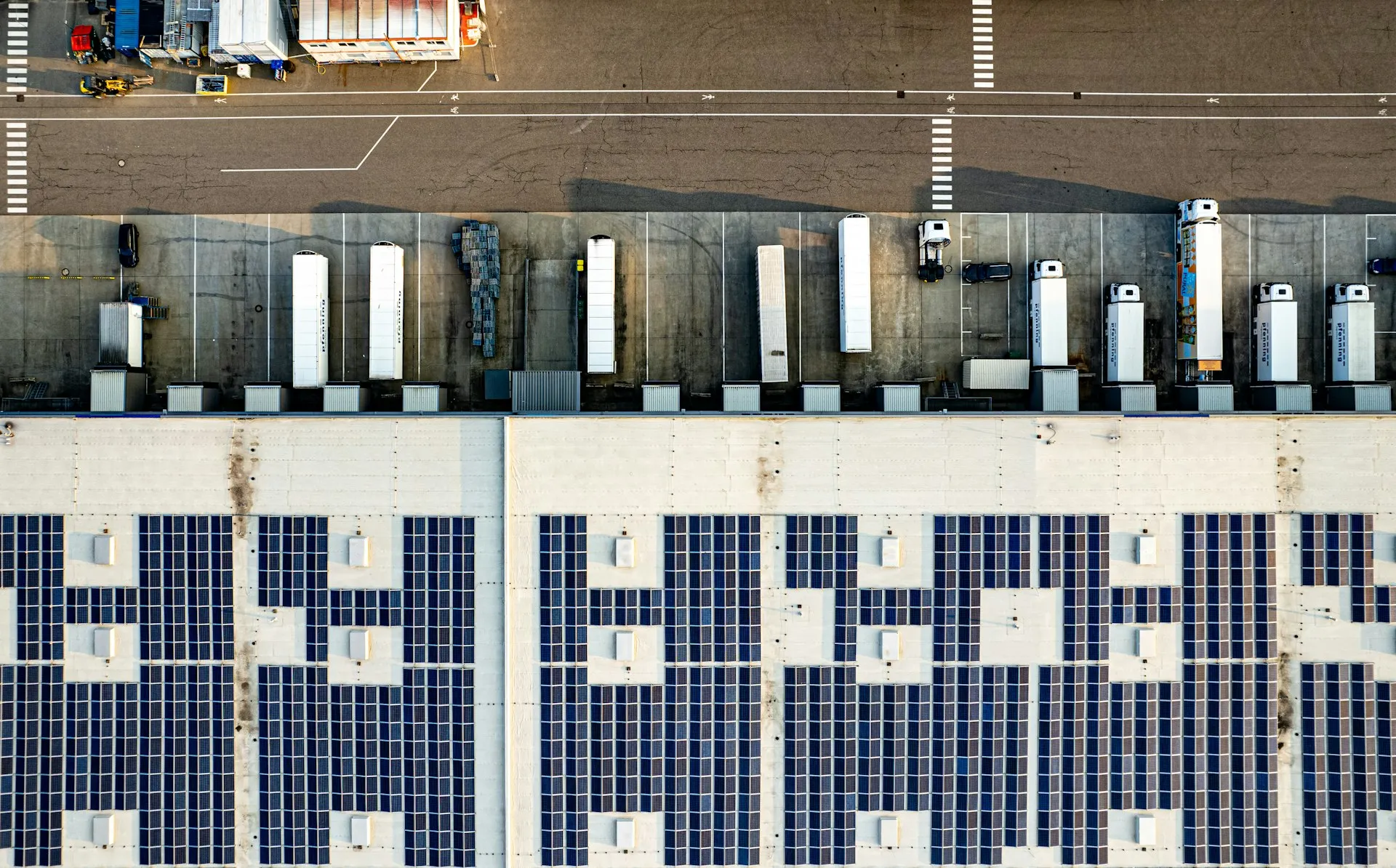
- Photovoltaic generation — rooftop or canopy PV produces energy during daylight, much of which would otherwise be exported or curtailed.
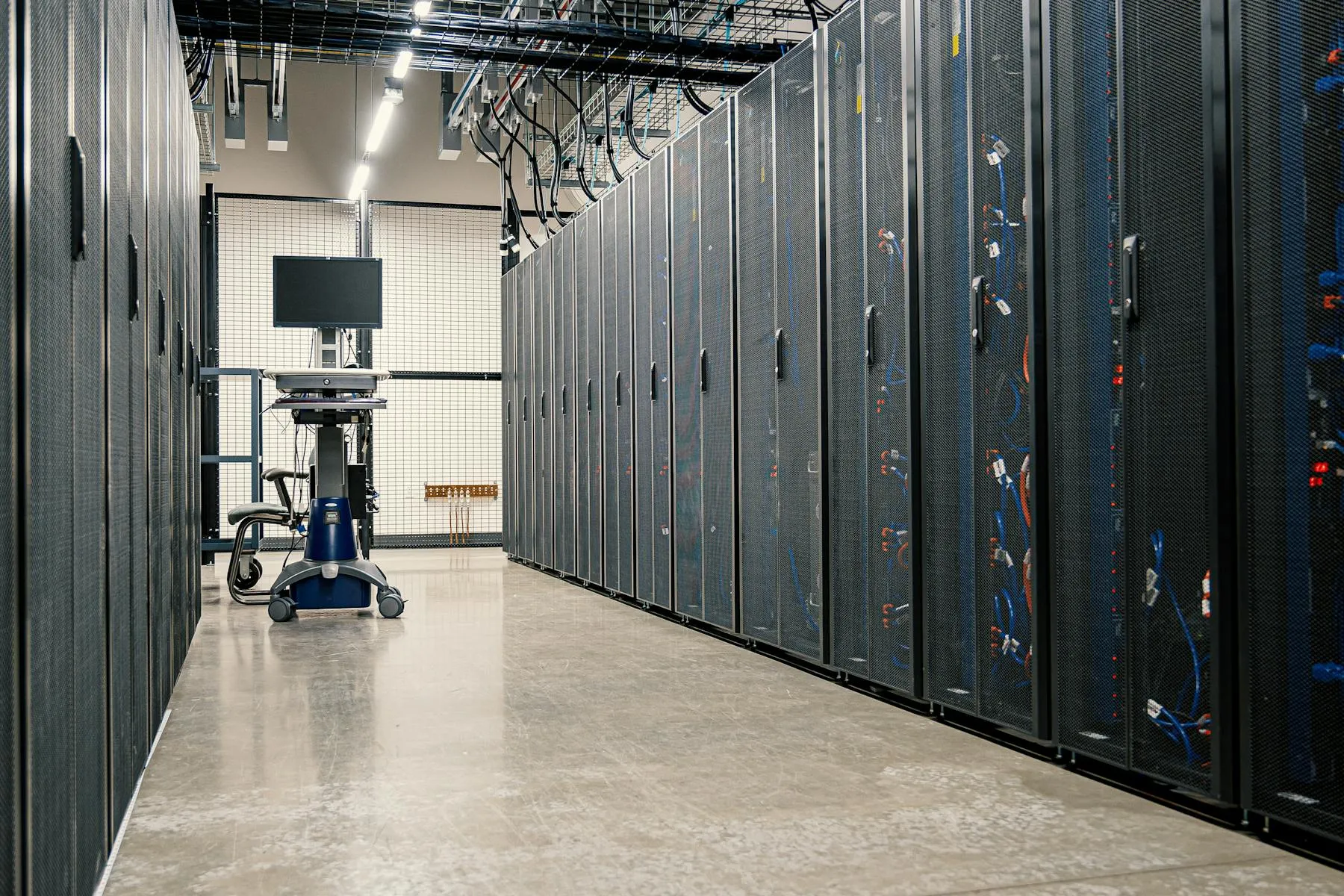
- Battery energy storage — a battery captures surplus solar and, when helpful, off-peak grid energy, then holds it until it is needed.
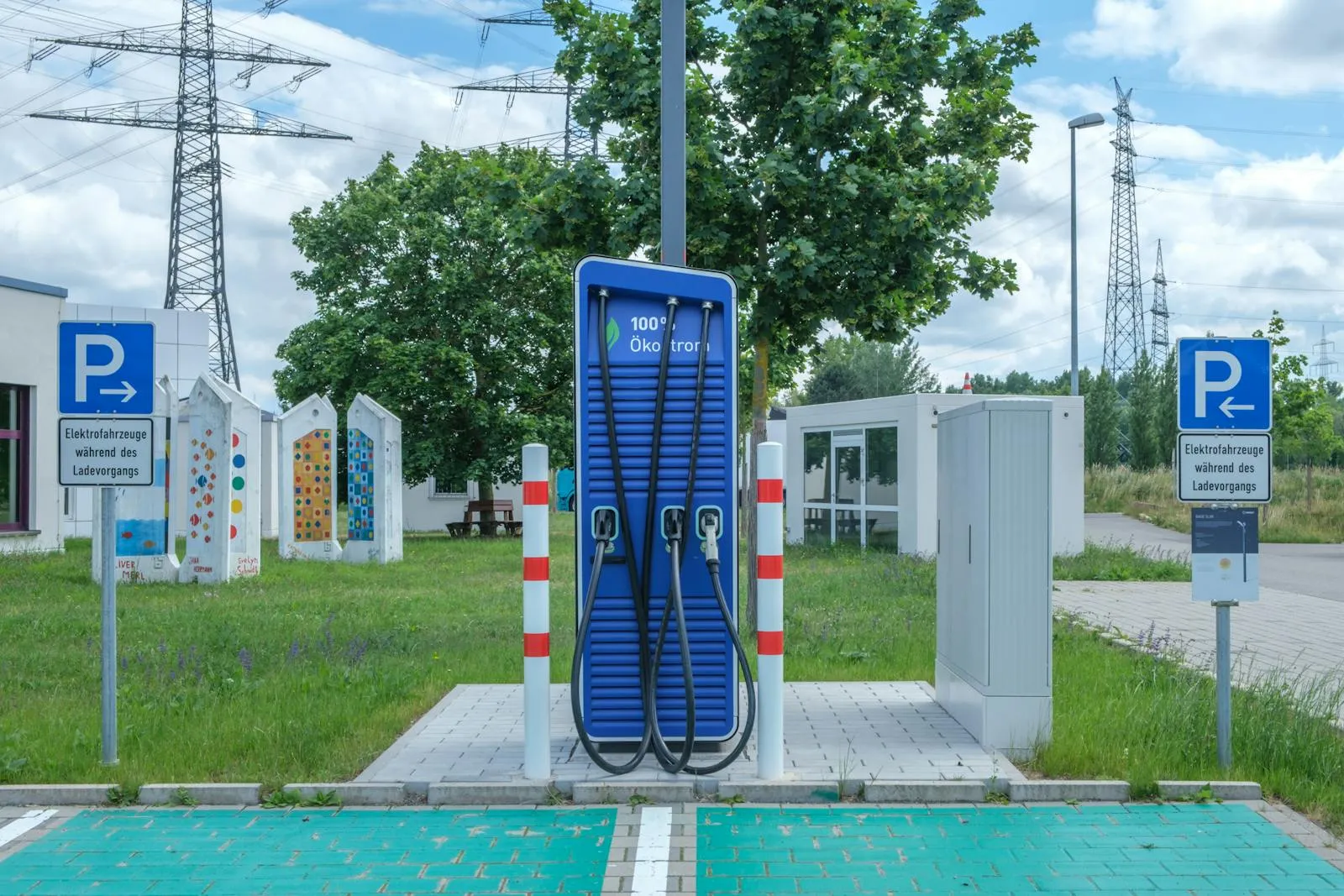
- EV charging — AC or DC chargers draw primarily on stored energy, so their power demand is decoupled from the instantaneous grid draw.
The battery is what turns three pieces of equipment into one system. Solar output peaks at midday; charging demand peaks when drivers arrive. Storage bridges that gap in time, and it also absorbs the short, sharp power spikes that fast charging creates. The result is a site that presents a smaller, smoother load to the utility than its charging nameplate would suggest.
AC-coupled vs. DC-coupled
There are two common architectures, and the right one depends on the site.
AC-coupled
In an AC-coupled design, PV, storage and chargers each have their own inverter or converter and meet on a shared AC bus. It is flexible and easy to retrofit onto a site that already has solar, because the battery is simply added to the existing AC infrastructure.
DC-coupled
In a DC-coupled design, PV and storage share a DC bus before a single conversion stage. Solar can charge the battery directly without an AC round-trip, which reduces conversion losses and suits new builds where charging is the primary purpose. Entogo’s DC-coupled energy-storage-and-charging products follow this pattern, integrating the conversion, storage and charging stages so the system arrives as a coordinated package rather than separately specified parts.
Where it makes sense
Solar-storage-charging systems are a strong fit where grid capacity is constrained or expensive to expand:
- Public and commercial charging hubs that want fast charging on a limited service connection.
- Bus and fleet depots with predictable, high-energy nightly charging.
- Retail, hospitality and workplace sites adding charging as an amenity without a full electrical upgrade.
- Remote or grid-edge locations where the system can run as a microgrid and ride through interruptions on stored energy.
What a buyer should specify
Treat the system as one engineered package, not three procurements. The key parameters are the charging power and number of ports, the daily energy the site must deliver, the available grid connection, and the local PV resource. From those, the battery energy and power rating, the PV array size and the conversion architecture follow. Because the layers are interdependent, specifying them together — rather than bolting a battery onto a finished charging design — is what produces a system that actually relieves the grid constraint.
This integrated approach is also where standards matter: the storage portion is governed by codes such as UL 9540 and NFPA 855, and the grid interface by IEEE 1547, so the package has to be coordinated for compliance as well as performance. Specified as a system from the start, solar-storage-charging turns a grid limitation into a design parameter rather than a project blocker.